
Sex Offender Checks in Iron County
The Michigan State Police registry program is the main public source for an Iron County sex offender search. MSP manages the Michigan Public Sex Offender Registry through its Criminal Justice Information Center. The public portal is free and does not require an account. It can search the whole county, one city, a ZIP code, a street area, or a known name. Iron County does not publish a separate county registry list, so a local check should begin with the state interface.
Keep the search goal clear. A geographic sweep supports personal and neighborhood safety, while a name search helps identify a known listing. The Iron County Sheriff is the local contact when someone suspects that a registrant has not reported required information. A court file explains the conviction and sentence, and OTIS covers some people under state correctional supervision. Those records answer different questions and should not be treated as substitutes for PSOR.
The MSP registry overview shows how Michigan provides registry access and explains its limits.
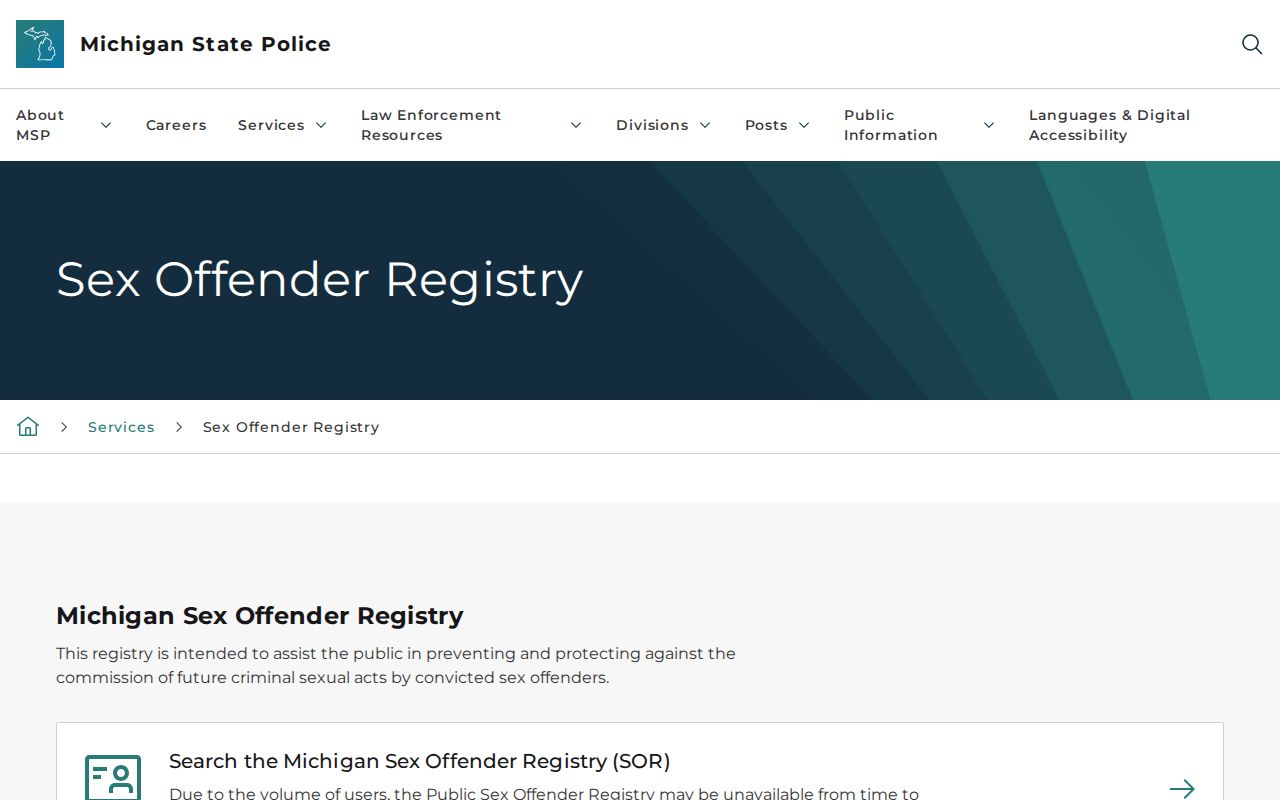
This state source is the best place to confirm current instructions before relying on a public listing.
Map Iron County Registry Addresses
Michigan PSOR supports an address-based neighborhood map. Enter a street address, city, ZIP code, and county as the interface requests, then choose a radius of .25, .50, 1, 2, or 5 miles. Selecting Iron County prevents an address with a similar city or street name elsewhere from shifting the map. An Iron River, Crystal Falls, or Caspian city filter can also narrow a broad county search.
Map results are a starting point, not a boundary survey. Read each detail page because the pin alone does not explain a status, listed location, or offense. MSP also allows searches for all published offenders, all incarcerated offenders, and all entries marked non-compliant. Those filters can answer a different question than an address radius. Record the date of the search because registry information may change as people report new data.
How to Search the Michigan Public Sex Offender Registry
Open the official Michigan Public Sex Offender Registry search and pick the narrowest dependable method. Both first and last names are needed for a name query, although partial names are accepted. Registration or MDOC numbers work as alternate identifiers. Geographic fields are more useful for an Iron County safety review when no specific person is known.
- Choose name, identifier, city/county/ZIP, or neighborhood-map search based on what is known.
- Select Iron County, or enter an Iron County city, ZIP, and street where the form calls for them.
- For a map search, choose a radius from .25 through 5 miles and review the displayed list.
- Open a result through its photograph or “View Details,” then read status and compliance as separate fields.
| Field Label | Type | Required | Notes |
|---|---|---|---|
| First and Last Name | Text | For name search | Both are needed; partial names are accepted. |
| Registration or MDOC Number | Text | Alternative | Either number can identify a listing. |
| Street Address | Text | Conditional | Add a city, county, or ZIP for the registry search. |
| City / County / ZIP | Text or select | No | Select Iron for a countywide list. |
| Radius | Select | For radius map | .25, .50, 1, 2, or 5 miles. |
The live PSOR interface shows the current search controls and map choices.
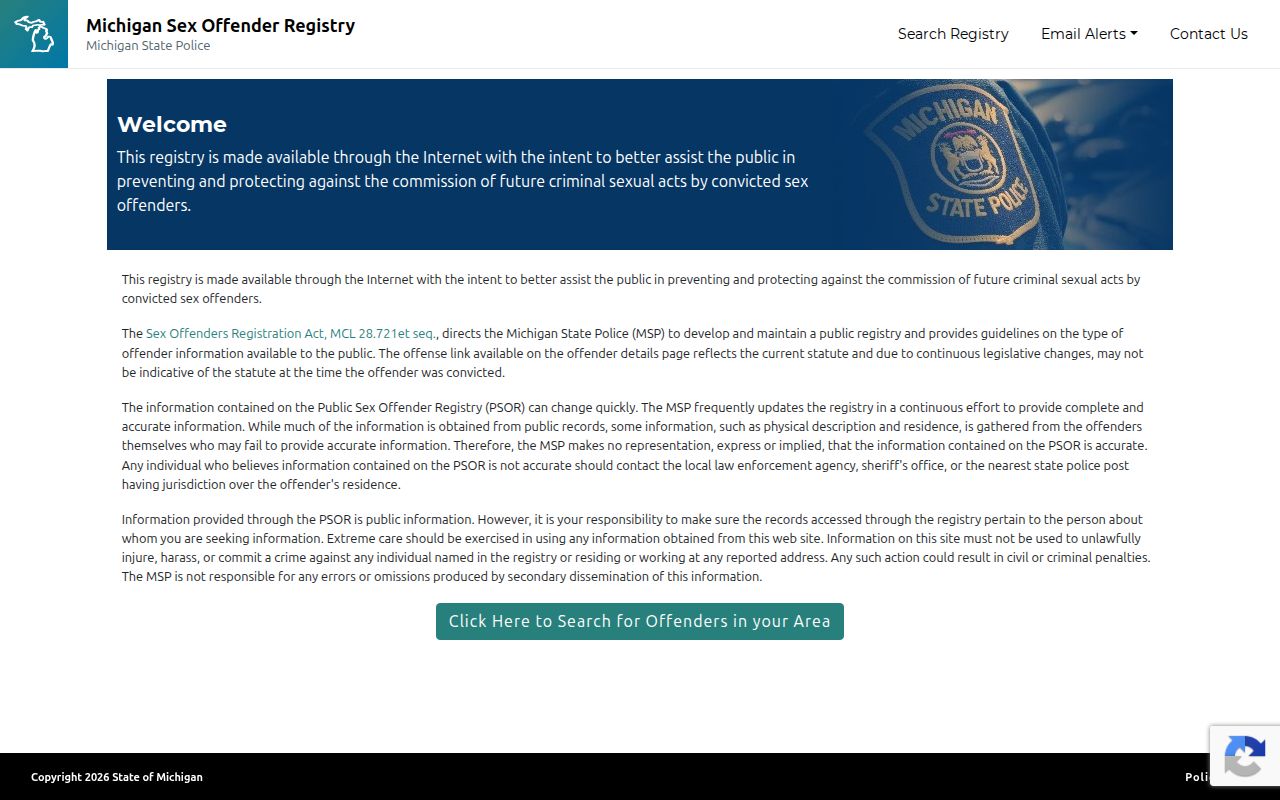
The interface makes it possible to move from a broad Iron County result set to an individual detail page.
Read Iron County Registry Status
A profile's “Status” describes the person's relationship to Michigan, while “Compliance Status” concerns whether required information was reported. Active means the person resides in Michigan. Incarcerated means the person is in custody in Michigan. Pending Out of State and Inactive Out of State describe a move or an out-of-state residence with a Michigan tie. Homeless means there is no fixed or temporary residence. Absconder means the person left the last reported address and their location is unknown.
Compliance labels are narrower. Address Violation, Campus Violation, Failed to Register, Failed to Verify, and False Information each point to a distinct claimed reporting failure. A violation label is not proof of a new offense. It also does not tell the reader how a court resolved any enforcement action. For a public safety concern, preserve the listing details and contact law enforcement rather than trying to investigate or confront anyone.
- Registry status
- Where or how the listing relates to Michigan, such as Active, Incarcerated, Homeless, or Absconder.
- Compliance status
- Whether the displayed entry indicates a problem with a required report or verification.
- Published listing
- The public part of the registry; Michigan law does not make every registration record public.
Inside a Registry Profile
Opening “View Details” supplies more context than a map pin or result row. Public fields may include a photograph, registered name, aliases, registration or MDOC number, physical description, reported residence or geographic location, offense information, update data, status, and compliance status. Availability can vary by listing and by the rules that govern publication. The registry does not disclose victim information, and Michigan does not offer a whole-database download.
| Name & Aliases | Registered name and any aliases that are published. |
|---|---|
| Photo & Description | Photograph and listed physical traits where available. |
| Location | Reported residence or other published geographic information. |
| Offense Information | Registry offense details shown under Michigan publication rules. |
| Identifiers | Registration number or MDOC number where displayed. |
| Status Fields | Registry status and compliance status, which must be read separately. |
A registry entry supports awareness. It does not replace the original criminal case file. Readers who need the charge history, judgment, or sentence should use Michigan court records and the clerk rather than infer those facts from a brief offense label.
Cross-State Iron County Searches
Iron County sits on the Wisconsin border, so a Michigan-only query can be too narrow when a safety check concerns an address, move, or connection across state lines. The U.S. Department of Justice National Sex Offender Public Website searches participating jurisdictions through one national layer. Use it after PSOR when the relevant place may fall outside Michigan.
NSOPW does not make Michigan's own portal less important. Return to PSOR to read Michigan status terms and use its local map and tracking tools. If the two systems appear to disagree, note the name, identifier, jurisdiction, and date. Then seek correction guidance from the agency that maintains the questioned entry rather than combining records on name alone.
The national registry search illustrates the cross-jurisdiction option available to Iron County readers.
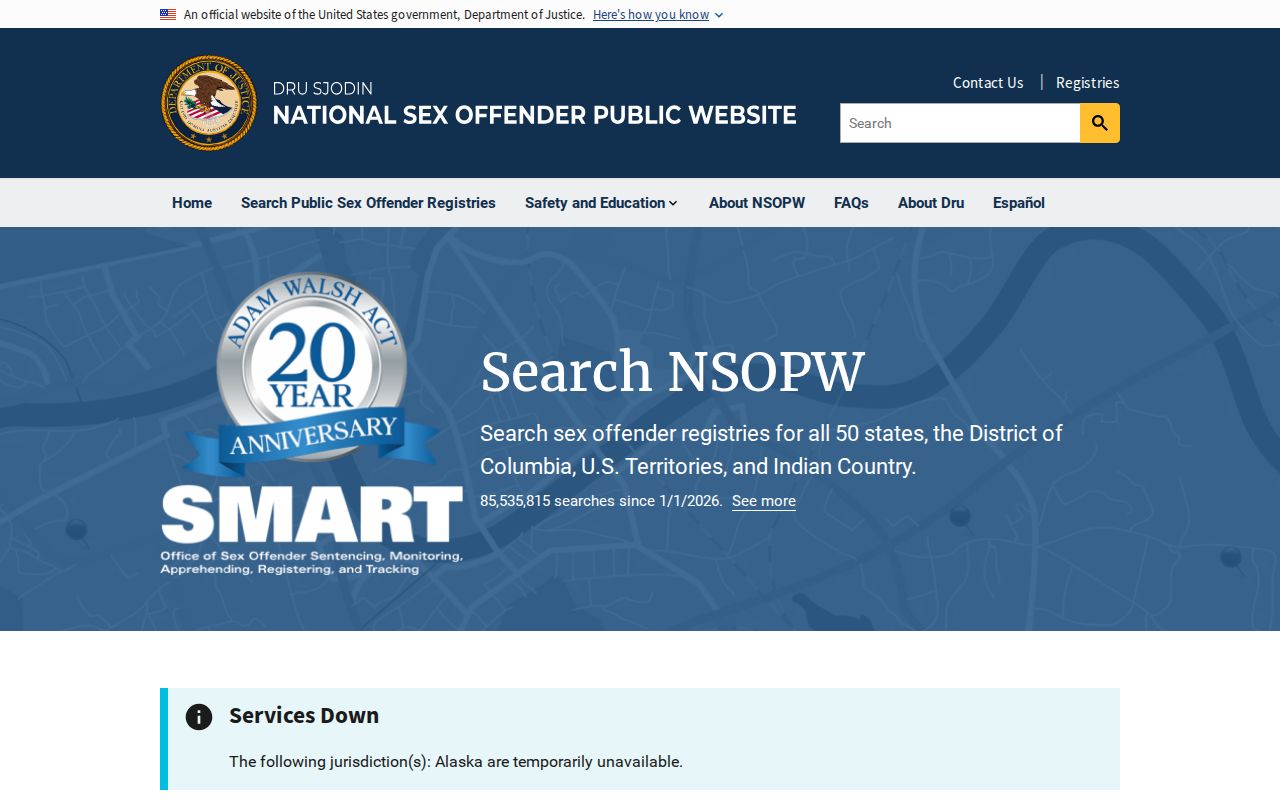
This second layer is most useful when the search area reaches Wisconsin or another state.
Michigan Registration Levels and Requirements
Michigan's Sex Offenders Registration Act uses Tier I, Tier II, and Tier III classifications. The statutory tier turns on the qualifying offense and related legal facts, not a reader's view of risk. Standard registration periods are 15 years for Tier I, 25 years for Tier II, and life for Tier III, subject to the current law and any case-specific ruling or exception. Reporting and verification duties also depend on tier and current circumstances.
| Tier | Standard Duration | Public Visibility |
|---|---|---|
| Tier I | 15 years | Publication depends on Michigan's current statutory rules. |
| Tier II | 25 years | Published fields depend on the governing offense and law. |
| Tier III | Life | Published subject to current statutory limits and exceptions. |
The official SORA definitions in MCL 28.722 set the tier framework.
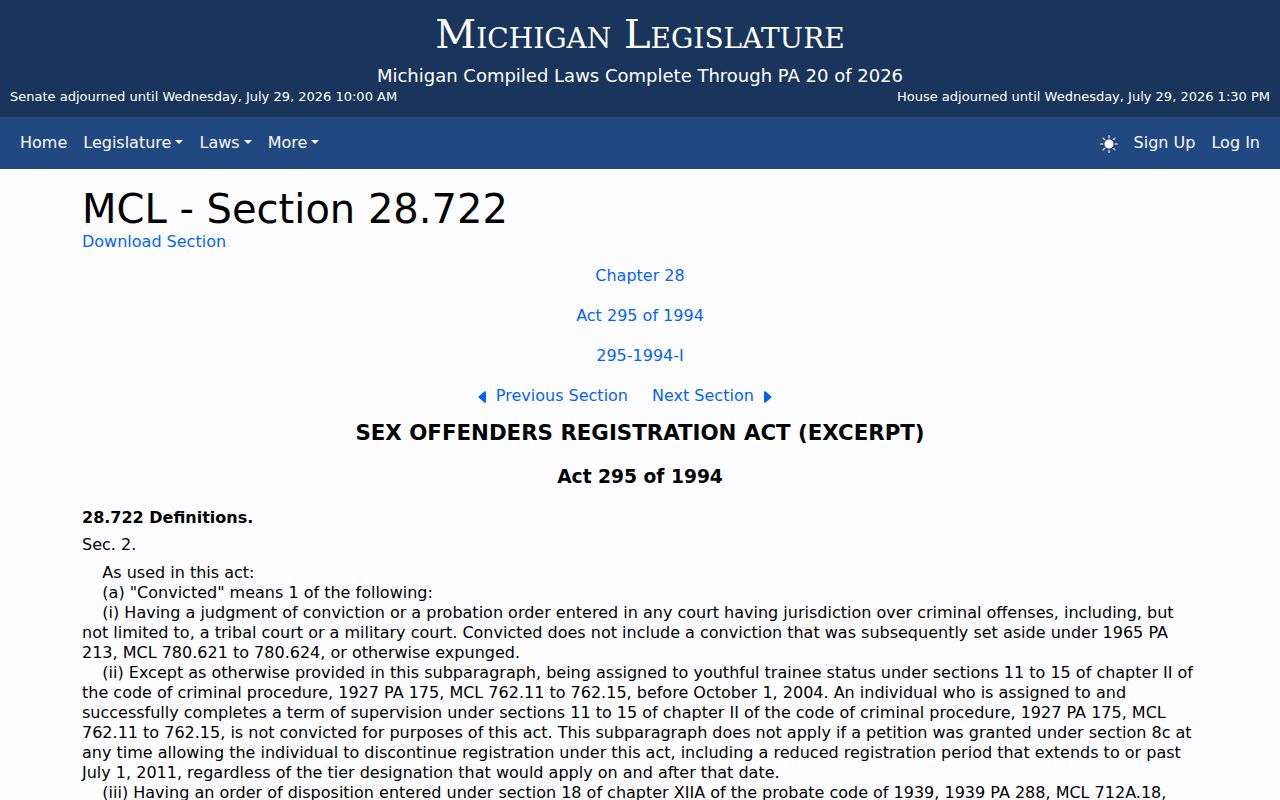
The statute should control any tier question because public summaries cannot capture every classification rule.
Track Iron County Registry Changes
Michigan PSOR offers “Track Offender” on an individual detail page. Enter an email address twice, agree to the Terms of Use, and register. MSP says a confirmation should arrive within 24 hours. Once active, tracking can send an email when the listing changes residence, work information, or school enrollment. It follows one detail page rather than building a downloadable Iron County list.
A notice means the published listing changed. It does not establish a breach of registry duties or a new crime. Reopen the current profile and read both status fields. If the update creates an immediate safety issue, use emergency services. For a non-emergency question about a local listing, the Iron County Sheriff can direct the concern to the proper officer or MSP channel.
Note: Save the listing identifier, notice date, and changed field before asking an agency to review a suspected error or violation.
Report Iron County Registry Concerns
The Iron County Sheriff operates from Suite 18 in the courthouse complex at 2 South Sixth Street, Crystal Falls, MI 49920. The main number is 906-875-0650, and the sheriff operation is staffed around the clock. That line is the local non-emergency channel for a suspected address or verification issue. The correctional facility number is separate and should not be used as a registry help line.
Iron County Sheriff
2 South Sixth Street, Suite 18
Crystal Falls, MI 49920
906-875-0650
24/7 sheriff operation
Do not attempt to verify an address by entering private property or contacting a listed household. For a likely portal error, follow correction directions on the MSP registry page because the state maintains the listing. For an urgent threat or crime in progress, call 911. Local law enforcement can decide what inquiry or referral is proper.
Community Notification and Lawful Use
Michigan makes PSOR data available for public awareness and safety planning. Use a result to make calm, lawful choices, to discuss safety with family, or to provide a precise concern to police. Verify the current detail page before relying on a saved image or old printout. Michigan does not release victim information through the registry, and a public offense entry does not open those protected details.
The Michigan reporting-duty statute describes information that registrants must report.
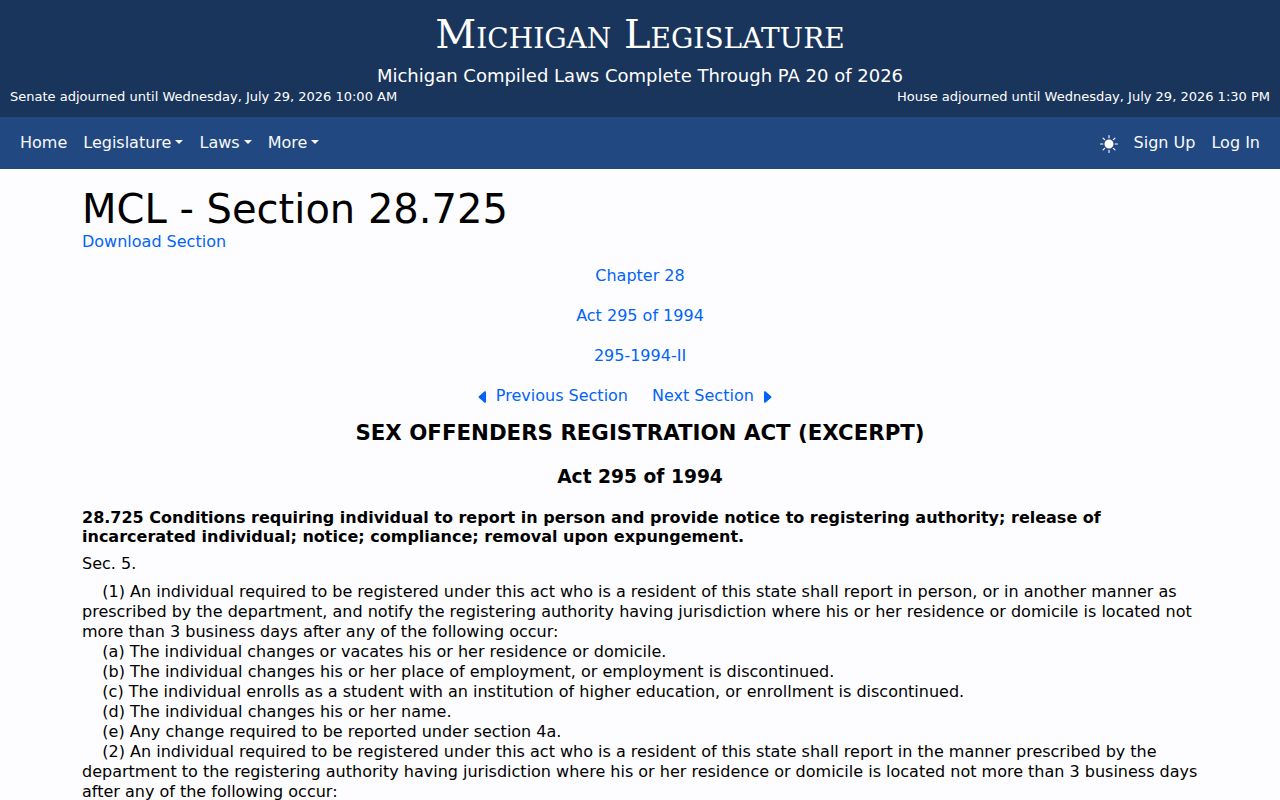
These statutory duties help explain why residence and other listed information may change between searches.
Use Registry Information Lawfully: Harassment, threats, intimidation, trespass, or other misuse can be a crime under Michigan's Sex Offenders Registration Act. Never confront a registrant or household.